
Harmony on Water: Explorating Vernacular Architecture by Designing a Floating Resort in Tongging
Keharmonisan Diatas Air: Mengeksplorasi Arsitektur Vernakular dalam Perancangan Resort Apung di Kawasan Tongging
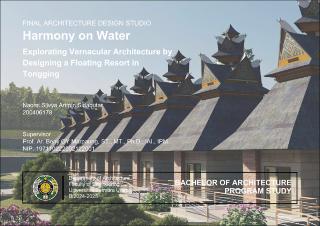
Abstract
The design of the floating resort in Tongging, located on the edge of Toba Lake, North Sumatera presents an innovative approach to the preservation of local culture through vernacular architecture. This research explores the integration of traditional architectural elements into contempary design, aiming to creeate a foating resort that is sustainable, culturally relevant, and enviromentally harmonious. The project responds to the challenges of balancing modern tourism development with the conservation of local heritage and surrounding ecosystem. As global tourism continues to grow, the design of this floating resort serves as a case study for combining the principles of vernacular architecture with modern hispitality infrastructure. The research employs a qualitative methodology that includes site analysis, litaerature review, and comparative studies of similar projects. The first step involves exploring the vernacular architecture of the Karo people, focusing on their traditional houses, construction techhniques, and material use. This researches examines how these practices ca be adapted to create a floating resort that respects the local cultural identify while addressing contempory design needs. In particular, it highlights the significance of utilizing locally sourced materials, such as wood and bamboo, and the importance of building designs that align with the natural environment of Toba Lake.
The study also addresses the challenges and opputunities wi th designing a floating structure in an area prone to enviromental and social complexities. Toba Lake, being an unique and sennsitive natural site, requires special consideration of its ecosystem, water qualify, and waste management. The design incorporates sustainable practices by utilizing renewable energy sources, water efficient system, and environmentally friendly building materials. It also takes into account local climate conditioons, ensuring that the resort offers comfort without disrupting the natural landscape. The project’s design emphasizes the creation of space that fosters cultural exchange between visitors and the local community, preserving the identiify and traditions of the Karo people. Through the integration of vernacular architecture into the floating resort, the design seeks to offer an authentic cultural experience, while also ensuring the long-term sustainability of the resort and the surrounding environment. This research contributes to the border fiels of sustainable architecture by showcasing how vernacular design principles can be applied to contempory touurism facilities, promoting both environmennttal stewardship and cultural preservation. The findings suggest that architecture can play a key role in maintaining cultural values while embracing modernity, offering a blueprint for future susttainable tourism developments.
Collections
- Undergraduate Theses [1234]