
Designing Youth Center with Sustainable Architecture Approach in Medan
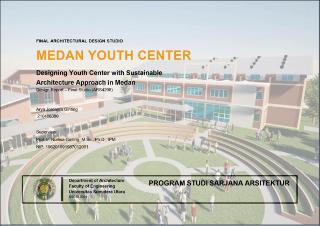
Abstract
Adolescence is a transitional period from childhood to adulthood characterized by an identity crisis. The problem among teenagers today is the lack of places to do activities, so teenagers tend to spend their free time in less productive places that can lead to negative activities. Medan City is one of the most populous cities in Indonesia with a significant teenage population. In addition, facilities for teenagers to do activities in Medan city are still inadequate. Therefore, a youth center facility is needed that can provide a space for youth to interact, learn, and develop skills in their spare time. The design of this Youth Center uses a sustainable architecture approach in order to reduce the environmental impact caused by the building. This research uses a qualitative approach through literature study and field study. Primary data were collected via direct observation and site visits, while secondary data were obtained from literature reviews and comparative studies of buildings with similar functions and themes. The results consist of the proposed youth center design and its significance. The design provides a sustainable, multifunctional space that supports the needs of teenagers in Medan. It highlights the youth center’s essential role in fostering the younger generation's development by offering educational, creative, and social spaces that nurture their interests and talents in education, sports, arts, and community engagement.
Collections
- Undergraduate Theses [1234]